You run your fingers through your hair in the morning and notice more strands than usual on your pillow. Your part seems wider, and your once-thick ponytail feels noticeably thinner. If you’re experiencing these changes, you’re not imagining things. Our team at The LUX NP understands how concerning these shifts can be, especially when you’re looking for answers about what’s happening with your body and appearance.
Hormonal imbalances can absolutely cause hair thinning, and they’re among the most common reasons women notice changes in hair density and growth patterns. Personalized hair loss treatments can help address these concerns when hormones are the underlying cause.
How Hormonal Changes Affect Your Hair Growth
Your hair follicles are incredibly sensitive to hormone fluctuations. Think of hormones as the conductors of your hair’s orchestra—when they’re in harmony, your hair grows strong and healthy. When they’re out of balance, the entire system gets disrupted.
During normal hair growth, your follicles cycle through growth, transition, and resting phases. Hormonal shifts can shorten the growth phase while extending the resting phase, leading to increased shedding and less time for new hair to develop properly.
Key Hormones That Impact Hair Health
Several hormones play crucial roles in maintaining healthy hair growth. Estrogen acts like your hair’s protector, supporting thickness and encouraging growth. When estrogen levels drop, you lose this protective effect.
On the flip side, testosterone and its derivative, dihydrotestosterone (DHT), can shrink hair follicles, leading to thinner, weaker strands. Thyroid hormones regulate the timing of your hair cycles, while cortisol—your stress hormone—can disrupt the entire growth process.
Common Signs Your Hormones Are Behind Hair Thinning
Hormonal hair thinning has distinct patterns that help differentiate it from other causes. You’ll typically notice gradual changes rather than sudden patches of hair loss. Hormone replacement therapy (HRT) consultations can help identify these patterns and create targeted treatment plans.
What Hormonal Hair Loss Looks Like
- Gradual thinning across the crown and temples
- Wider part line that becomes more noticeable
- Hair feels finer and less voluminous overall
- Increased shedding during washing or brushing
Other Signs That Point to Hormone Issues
Your body often gives you multiple clues when hormones are imbalanced. Hair thinning rarely happens in isolation. These symptoms often indicate broader hormonal shifts that can be addressed through comprehensive treatment approaches.
- Irregular periods or menstrual changes
- Unexplained weight changes
- Sleep disruptions or night sweats
- Mood swings or increased irritability
- Skin changes or adult acne
Life Stages When Hormonal Hair Thinning Happens Most
Certain times in your life make you more vulnerable to hormone-related hair changes. Recognizing these periods helps you understand why your hair might be acting differently.
Perimenopause & Menopause
As estrogen levels naturally decline during perimenopause and menopause, you lose the hormone that helps keep hair thick and healthy. This phase often brings the most noticeable changes in hair density and growth patterns. Professional treatments during this transition can help support your body’s changing needs.
Postpartum Period
After pregnancy, your hormones shift dramatically as your body returns to its pre-pregnancy state. Many women experience temporary but significant hair loss during this transition, typically starting 3–6 months after delivery.
Thyroid Disorders
Both overactive and underactive thyroid conditions can disrupt your hair cycles. Your thyroid hormones control how fast your body functions, including how quickly your hair grows and sheds.
How Hormone Replacement Therapy Can Help Your Hair
When hormonal imbalances are causing your hair to thin, addressing the underlying hormone levels can help restore healthier growth patterns. HRT works by replenishing the hormones your body needs to support hair health.
Our team thoroughly reviews your concerns, explores your health history, and discusses how hormonal balance can support your quality of life. A comprehensive lab panel helps us better understand your needs. Together, we can create a custom treatment plan, including options like pellet therapy, to help support your goals.
Benefits of HRT for Hair Health
Hormone replacement therapy can offer many benefits for your hair, including healthier skin and hair by improving elasticity and helping with hair thinning. You’ll also experience symptom relief that can ease hot flashes, night sweats, and mood swings that often accompany hormonal changes.
- Restores estrogen levels that support hair growth
- Improves hair texture and thickness over time
- Reduces excessive shedding
- Supports overall scalp health
Pellet Therapy for Consistent Hormone Balance
Forget daily pills or sticky patches. Pellet therapy offers a simpler, more consistent way to manage your hormones. Instead of constantly topping up your hormone levels, pellet therapy is like setting a slow, steady drip.
Tiny pellets, about the size of a grain of rice, are inserted under your skin. These little powerhouses release hormones gradually and consistently, like a tiny, personalized time-release capsule. This means personalized treatment with dosage customized to fit your individual needs, convenience redefined with months of hormone balance without daily reminders, and fewer side effects than other HRT methods.
Hair Restoration Treatments That Work
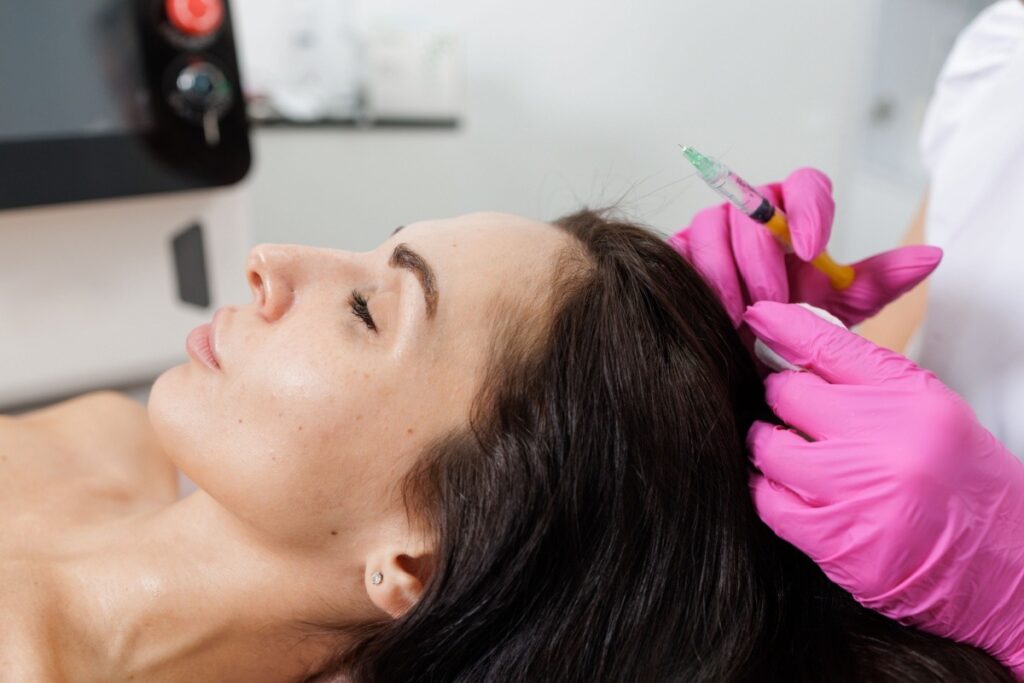
Combining hormone therapy with targeted hair restoration treatments can enhance your results. These complementary approaches work together to promote hair growth.
Scalp Microneedling
Scalp microneedling creates micro-channels in your scalp that activate your body’s natural healing processes. This treatment increases blood flow to deliver nutrients and oxygen directly to hair follicles, stimulates collagen production to strengthen follicles, and releases growth factors that encourage regeneration and repair. The microneedling process has been shown to support natural healing and tissue regeneration.
PRP Hair Restoration
PRP, or platelet-rich plasma therapy, is a medical treatment used to promote healing, regeneration, and regrowth. The process involves drawing blood, processing it, and reinjecting it into your scalp to promote hair growth. This treatment harnesses your body’s natural healing mechanisms to rejuvenate hair growth from within.
Additional Support Options
Laser hair restoration technology offers nonsurgical light therapy that stimulates follicles and reinvigorates scalp health. Nutritional support through biotin IV infusions can provide powerful nutrient delivery to support hair growth from within. In contrast, targeted supplements, including biotin, multivitamins, and targeted growth formulas, work alongside topical treatments such as nourishing hair mists, shampoos, and deep conditioners.
Reclaim Your Canvas
If you’re noticing changes in your hair and suspect hormones might be the culprit, you don’t have to accept thinning hair as inevitable. Our team at The Lux NP can help you understand what’s happening with your hormones and create a personalized plan to support healthier hair growth. Contact us today to schedule your consultation and take the first step toward restoring your hair’s natural vitality.